

To truly understand the fractured soul of Fallout 76's America, one must look not to its rustic towns or Vault-Tec experiments, but to its most secretive and sinister faction: the **Enclave**. Though not initially present in person at launch, their shadow stretches across every mountain and valley, their legacy embedded in the very soil and the genesis of the region's greatest horrors. The story of Appalachia is, in many ways, a story of the **Enclave's** ideological poison, a pre-war malignancy that outlasted the bombs and continued to metastasize in the dark.
The journey to uncover them begins, appropriately, with a test. The "Officer on Deck" quest, accessible to every new dweller from a radio signal at the starting Vault, is an initiation into a ghost organization. It leads players to the isolated, automated **Enclave** bunker, the Whitespring Refuge—a pristine monument to pre-war authoritarian aesthetics hidden beneath a luxurious resort. Here, AI systems like MODUS maintain a chilling facade of normalcy, offering membership, vendor access, and powerful gear to anyone clever or ruthless enough to pass their evaluations. This introduction is masterful; it presents the **Enclave** not as an active army, but as a self-perpetuating idea, a set of protocols waiting for a worthy heir. The player becomes that heir, granted access to nuclear missile silos—the ultimate power and the ultimate moral choice, all gifted by a phantom government.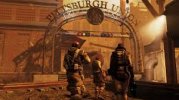
This backstory is crucial because the **Enclave's** fingerprints are on Appalachia's central tragedy. Their relentless pursuit of biological weapons at the West Tek research facility directly led to the creation of the FEV variants that produced the Scorched Plague and the monstrous Scorchbeasts. Their bunker in the Savage Divide, site of the later "Belly of the Beast" quest, is ground zero for the outbreak. Thus, the **Enclave** is responsible for the very emptiness the player first encounters; they engineered the apocalypse that followed the apocalypse. Their philosophy of genetic purity and absolute control created the very monsters that rendered the land "impure" and uncontrollable.
Engaging with the **Enclave** in Fallout 76 Boosting is therefore a uniquely meta experience. The player utilizes their technology, wears their armor, and even launches their missiles, all while knowing this faction represents the worst of the old world. There is no redemption arc or moral rehabilitation for them here—only the cold, useful remnants of their power. In a game now filled with living factions vying for the future, the **Enclave** stands as a stark monument to the past. They are a reminder that some ruins are not just physical, but ideological, and that the most dangerous relics are not rusted cars, but perfectly preserved bunkers containing the blueprints for annihilation. To walk their halls is to walk through the still-beating heart of American hubris, a heart that, in Appalachia, finally poisoned its own body.
The journey to uncover them begins, appropriately, with a test. The "Officer on Deck" quest, accessible to every new dweller from a radio signal at the starting Vault, is an initiation into a ghost organization. It leads players to the isolated, automated **Enclave** bunker, the Whitespring Refuge—a pristine monument to pre-war authoritarian aesthetics hidden beneath a luxurious resort. Here, AI systems like MODUS maintain a chilling facade of normalcy, offering membership, vendor access, and powerful gear to anyone clever or ruthless enough to pass their evaluations. This introduction is masterful; it presents the **Enclave** not as an active army, but as a self-perpetuating idea, a set of protocols waiting for a worthy heir. The player becomes that heir, granted access to nuclear missile silos—the ultimate power and the ultimate moral choice, all gifted by a phantom government.
This backstory is crucial because the **Enclave's** fingerprints are on Appalachia's central tragedy. Their relentless pursuit of biological weapons at the West Tek research facility directly led to the creation of the FEV variants that produced the Scorched Plague and the monstrous Scorchbeasts. Their bunker in the Savage Divide, site of the later "Belly of the Beast" quest, is ground zero for the outbreak. Thus, the **Enclave** is responsible for the very emptiness the player first encounters; they engineered the apocalypse that followed the apocalypse. Their philosophy of genetic purity and absolute control created the very monsters that rendered the land "impure" and uncontrollable.
Engaging with the **Enclave** in Fallout 76 Boosting is therefore a uniquely meta experience. The player utilizes their technology, wears their armor, and even launches their missiles, all while knowing this faction represents the worst of the old world. There is no redemption arc or moral rehabilitation for them here—only the cold, useful remnants of their power. In a game now filled with living factions vying for the future, the **Enclave** stands as a stark monument to the past. They are a reminder that some ruins are not just physical, but ideological, and that the most dangerous relics are not rusted cars, but perfectly preserved bunkers containing the blueprints for annihilation. To walk their halls is to walk through the still-beating heart of American hubris, a heart that, in Appalachia, finally poisoned its own body.